Our March newsletter is out now!

This month you can:

  • Get to know more about some of our incredible nursing
  • Learn more about when we can expect flu vaccinations
  • Understand the increasing measles risk and the importance of vaccination
  • Celebrate International Women’s Day and our incredible team

Not yet subscribed?

Simply navigate to the bottom of this page and fill out the form.

Summer in Australia means more time outdoors, from beach days and sport to long afternoons in the sun. With Australia having some of the highest UV levels in the world, particularly during summer, protecting your skin is essential for long-term health.

In this article, Dr Bejoy Machumpurath, an accredited full-time skin cancer doctor consulting at Eastbound Clinic, shares his advice on sun safety, skin cancer risk, and the importance of regular skin checks.

Why is sun safety so important in Australia?

Australia’s UV levels are among the highest globally, and they rise significantly during summer. Prolonged exposure to ultraviolet (UV) radiation increases the risk of skin damage and skin cancer, making sun protection a critical part of everyday health care.

What is skin cancer?

Skin cancer refers to several types of cancers that affect the cells of the skin.

The most common skin cancers seen in general practice are:

  • Basal Cell Carcinomas (BCCs)
  • Squamous Cell Carcinomas (SCCs)

These cancers affect the basal and squamous cells of the skin and are generally less dangerous when detected early.

Melanoma is a rarer but far more serious form of skin cancer. It affects melanocyte cells and can spread throughout the body relatively quickly, which is why early detection through skin checks is so important.

What causes skin cancer?

There are many risk factors for skin cancer, but most cases are linked to UV exposure combined with non-modifiable factors such as genetics and family history.

UV exposure most commonly comes from sunlight, especially for people who:

  • Work outdoors
  • Play outdoor sports regularly
  • Spend extended time in the sun without protection

Taking sun protection measures, such as wearing hats, covering up and using sunscreen, can significantly reduce risk.

Another important UV risk factor is current or past solarium use.

Other risk factors relate to your individual skin type and genetics, including:

  • Ethnic background
  • Hair and eye colour
  • Number of moles
  • Personal or family history of skin cancer

A rarer but significant risk factor is immunosuppression, including certain medications, particularly those used by organ transplant recipients.

Is there a safe or healthy tan?

There is no such thing as a safe or healthy tan.

Tanning occurs as a response to UV damage. When the skin is exposed to harmful UV radiation, melanocyte cells produce melanin to help protect against further damage. This means a tan always indicates some level of skin damage.

How can I protect my skin during summer?

The best way to reduce your risk of skin cancer is to actively protect your skin whenever the UV index is 3 or above. The UV index can be found via the SunSmart Global UV app and the Bureau of Meteorology (BOM) website.

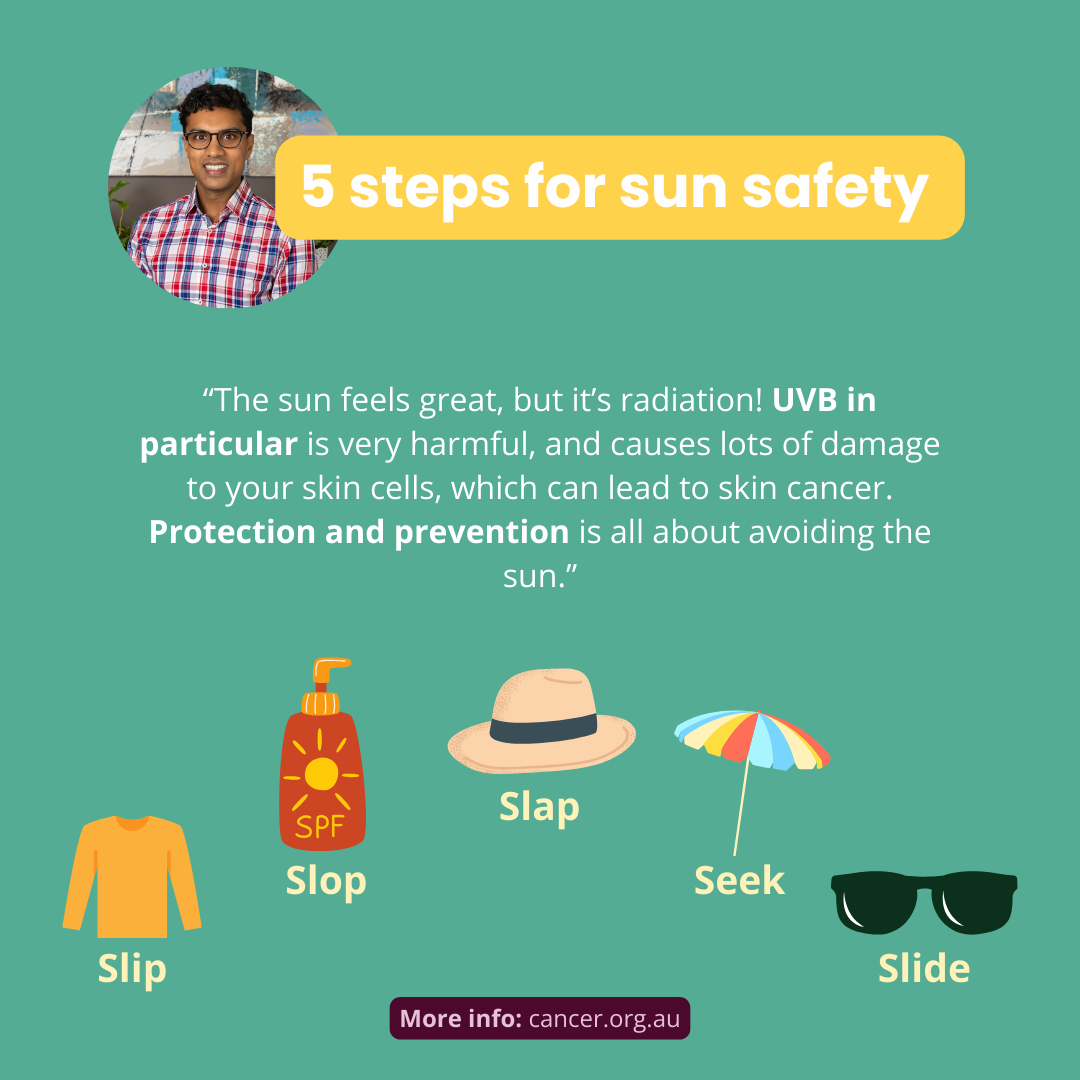
A simple guide to sun protection is:

  • Slip on protective clothing – If you can’t see through the fabric when held up to the sun, it’s providing protection.
  • Slop on sunscreen – Use at least SPF 30+, preferably SPF 50+. About 7 teaspoons (35 mL) is needed for full body coverage for an average adult.
  • Slap on a wide-brimmed hat
  • Seek shade where possible
  • Slide on UV-protective sunglasses

What skin changes should I look out for?

You should monitor your skin for any spots that:

  • Look different from others
  • Are growing or changing
  • Have multiple colours
  • Bleed, don’t heal, or become painful

If you notice a spot you’re concerned about, it’s important to have it checked by a healthcare professional.

How often should I get a skin check?

Most people considered at risk should have a yearly professional skin check. This includes many people with Caucasian or Mediterranean skin types, particularly those born in Australia with additional risk factors.

If you’re unsure whether you need regular skin checks, speak with your healthcare professional.

Some people may require more frequent skin checks, including those with:

  • Multiple previous skin cancers
  • A strong personal or family history of melanoma
  • Certain immunosuppressive medications

Your healthcare professional can advise on the right screening schedule for you.

At Eastbound Clinic the consulting GPs available to provide skin check appointments include:

  • Dr Aaron Rhodes
  • Dr Bejoy Machumpurath
  • Dr Cerys Jones
  • Dr Owen Latimer

Need to book an appointment?

Movember is a global movement that takes place every November, encouraging men to grow moustaches to spark conversations and shine a light on men’s health. The focus of Movember is on mental health and suicide prevention, as well as prostate and testicular cancer.

Believe it or not, the Movember movement began right here in Melbourne in 2003, when a group of friends decided to bring the moustache back into fashion as a way to get men talking about their health.

Men’s health at a glance

Did you know that men die, on average, nearly five years earlier than women, with preventable conditions being a major factor?

Here are some key stats that show why it’s so important for men to take charge of their health:

  • 75% of people who die by suicide are men, especially those aged 40–59 and 85+.
  • Prostate cancer is the most commonly diagnosed cancer in Australia, with an estimated 28,868 men likely to be diagnosed in 2025.
  • Around 79 Australian men are diagnosed every day, with 1 in 5 at risk of being diagnosed in their lifetime.
  • Testicular cancer is rarer but still significant, with an estimated incidence of 6.5 in every 100,000 men. In 2010, there were 706 new cases of testicular cancer in Australia.
  • Young men are more commonly affected by testicular cancer, with the average age of diagnosis being around 35 years.

What can you do?

Taking the first step to better health is easier than you think.

Here’s how you can start today:

  1. Surround yourself with positive influences – Spend time with those who lift you up, whether it’s family, friends, or colleagues. The connections we have make a big difference to our overall well-being.
  2. Start the conversation – Talking about your mental health doesn’t make you weak. Open up to a friend or your GP. You don’t need to be an expert, just listen and share.
  3. Know your health milestones – At age 45, you become eligible for a 45–49 year old health check, a comprehensive assessment by a GP to check your risk for chronic diseases, covering lifestyle, family history, and physical health. Speak to your GP and find out what checks are available to you.
  4. Take notice of your body – If something doesn’t feel right, don’t ignore it. Get familiar with what’s normal for your body and talk to a health professional if you have any concerns or just want to learn more.

“We understand visiting your GP can be confronting for some men, and we understand why. It’s so important to have a regular GP who understands you and what’s normal for your body and well-being. Men are usually more reluctant to get that thing that’s been bothering them checked out or talk about their mental health due to the perception that it’s a sign of weakness or just prioritising other things over their own health.”

Dr Owen Latimer, GP and Practice Owner

This Movember, take the first step toward better health.

Need to book an appointment?

Not sure who to book with?

Learn about the consulting GPs available at Eastbound here.

June is Bowel Cancer Awareness Month.

Bowel Cancer Australia’s signature event to raise awareness of bowel cancer and funds for the leading community-funded charity dedicated to helping people impacted by bowel cancer.

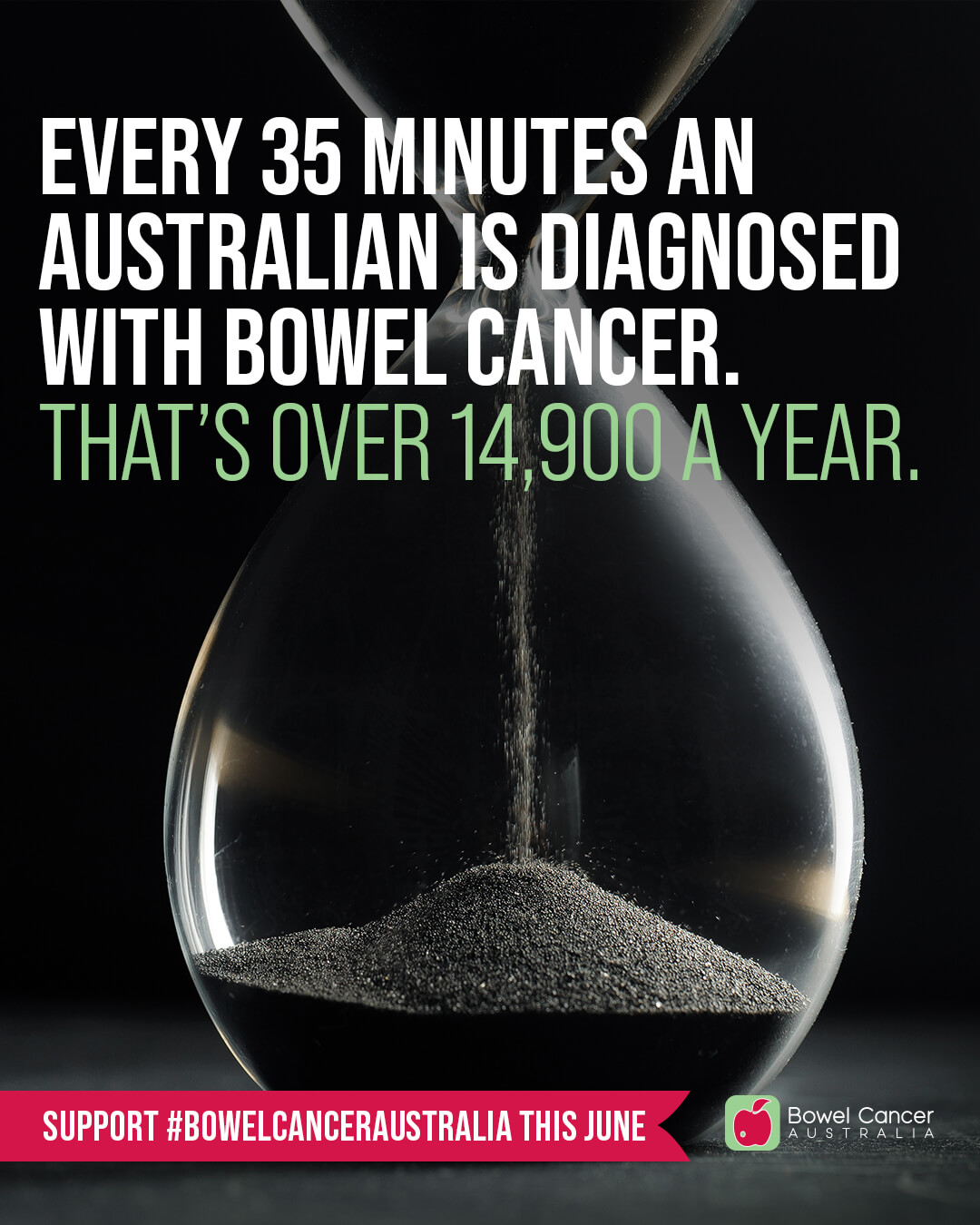
Bowel cancer is Australia’s second deadliest cancer and fourth most common, and it is estimated that one in 20 people will be diagnosed by the time they are 85.

However, it is one of the most treatable cancers when detected early.

What is bowel cancer?

Bowel cancer, also known as colorectal cancer, colon cancer or rectal cancer, develops from the inner lining of the bowel. It is usually preceded by growths called polyps, which may become invasive cancer if undetected.

Bowel cancer claims the lives of 101 Australians every week (5,276 people a year), and while the risk increases significantly with age, the disease can affect people of all ages. The average age at diagnosis is 69 years old.

People aged 50-74 are sent a bowel screening test every two years as part of the National Bowel Cancer Screening Program. From 1st July 2024, people aged 45-49 can also request a free screening kit to be mailed to them. Learn more at bowelcancer.org.au.

Bowel Cancer Australia (2025)

Signs and symptoms

Symptoms of bowel cancer include:

  • change in bowel habit including diarrhoea, constipation or the feeling of incomplete emptying
  • a change in the appearance or consistency of bowel movements such as thin bowel stools
  • blood in the stools
  • abdominal pain, bloating or cramping
  • anal or rectal pain
  • a lump in the anus or rectum
  • weight loss
  • unexplained fatigue
  • tiredness and/or anaemia (pale complexion, weakness and breathlessness)
  • blood in the urine or passing urine frequently or during the night, change in urine colour – dark, rusty or brown

If you have any symptoms, you should speak to your GP.

Causes of bowel cancer

Some factors that increase your risk of bowel cancer include:

  • a diet low in fibre
  • high red meat consumption, especially processed meats
  • being overweight or obese
  • alcohol consumption
  • smoking tobacco
  • inherited genetic risk and family history
  • inflammatory bowel disease such as Crohn’s disease
  • polyps
  • having a previous diagnosis of bowel cancer

Diagnosis of bowel cancer

A number of tests are used to diagnose bowel cancer. Initially, your doctor will give you a physical examination to feel if you have any abdominal swelling. Your doctor will also give you a digital rectal examination to check for any lumps or swelling in the rectum or anus.

You may have a blood test to see if there are any signs that you are losing blood in your stools. It can also check your red blood cell count as low red blood cells are common in people with bowel cancer.

You may have an iFOBT (often referred to as FOBT) depending on your symptoms. The test may be used if you have abdominal pain, changes to their bowel habits, unexplained weight loss, or anaemia. It is not recommended if you are bleeding from the rectum.

With the iFOBT, you will take a sample of your stools at home. The sample is examined under a microscope for traces of blood which could be a sign of polyps, cancer, or another bowel condition. It does not diagnose cancer but if blood is detected, your doctor will usually recommend a colonoscopy.

People aged 50-74 are sent an iFOBT (also known as a bowel screening test) every two years as part of the National Bowel Cancer Screening Program. From 1st July 2024, people aged 45-49 can also request a free screening kit to be mailed to them. Learn more at bowelcancer.org.au.

The best test for bowel cancer is a colonoscopy, which examines the length of the large bowel. Air is pumped into the colon through a flexible tube that is inserted into the anus. A camera on the end of the tube allows your doctor to look for abnormal tissue that is removed for further examination.

What do you know about inflammatory bowel disease?

Inflammatory bowel disease (IBD) is an umbrella term for a group of conditions that cause swelling and inflammation of the tissues in the digestive tract.

The most common types of IBD are Crohn’s disease and ulcerative colitis, which are life-long gastrointestinal disorders.

May is Crohn’s and Colitis Awareness Month.

Hosted by Crohn’s & Colitis Australia (CCA), this campaign gives Australians an opportunity to understand more about the reality of living with IBD.

We can help people living with these illnesses speak up about the day-to-day issues they face to reduce stigma and encourage others to seek diagnoses.

What is Crohn’s disease?

Crohn’s disease is a type of IBD that can cause inflammation anywhere in the digestive system.

The digestive system is made up of the digestive tract (the gut) and other organs that help your body break down and absorb food.

Inflammation can cause redness, swelling and pain, and is the body’s response to injury or irritation.

Crohn’s disease most commonly affects the small intestine. Crohn’s disease is a lifelong condition, and the intensity of symptoms varies between people.

There is currently no cure for Crohn’s disease but medicines, some diet therapies and sometimes surgery can reduce symptoms.

Crohn’s has little effect on life expectancy but can result in life-threatening complications. Most people with Crohn’s disease go on to lead happy and fulfilling lives. 

What is ulcerative colitis?

Ulcerative colitis affects the inner surface lining (epithelium) of the large intestine (colon and rectum).

Ulcerative colitis is a lifelong condition; however, there may be times when there are little to no symptoms (remission) and times when symptoms are more active (flare up).

There is currently no cure for ulcerative colitis, but it can be treated and managed with medication and/or surgery.

Lifestyle factors such as diet and exercise can also help to reduce disease activity. Ulcerative colitis has little effect on life expectancy.

Symptoms and diagnosis

In Crohn’s disease, inflammation can occur anywhere in the GI tract from the mouth to the anus. In ulcerative colitis, inflammation is limited to large intestine.

Crohn’s disease

People with Crohn’s can experience symptoms differently from each other.

The most common symptoms during a flare are:

  • Abdominal pain
  • Frequent diarrhea (sometimes mixed with mucus and blood) and need to use the toilet
  • Tiredness, fatigue
  • Raised temperature, fever
  • Loss of appetite, weight loss
  • Anaemia (reduced level of blood cells)

Inflammation in the gut can make it harder for the body to absorb nutrients from food, leading to many of these symptoms.

Less common symptoms during a flare are:

  • Joint pain
  • Mouth ulcers (sores)
  • Eye inflammation (uveitis and episcleritis)
  • Liver inflammation, such as Primary Sclerosing Cholangitis (PSC)
  • Skin rashes

Ulcerative colitis

People with colitis can experience symptoms differently from each other.

The most common symptoms during a flare are: 

  • Abdominal pain 
  • Frequent diarrhoea (sometimes mixed with mucus and blood) and urgent need to use the toilet often 
  • Tiredness, fatigue 
  • Raised temperature, fever 
  • Loss of appetite, weight loss 
  • Anaemia (reduced level of blood cells) 

Less common symptoms during a flare are: 

  • Joint pain 
  • Mouth ulcers (sores) 
  • Eye inflammation (uveitis and episcleritis) 
  • Liver inflammation, such as Primary Sclerosing Cholangitis (PSC) 
  • Skin rashes 
  • Hair loss 

If you are experiencing any symptoms, book an appointment with your doctor here.

Treatment

Crohn’s disease

There are many ways to manage Crohn’s disease, and what works for someone else may not work for you.

The main goal of Crohn’s disease treatment is to reduce inflammation and symptoms.

Various medications are used to reduce inflammation. For more detailed information, see Crohn’s and Colitis Australia’s page on Medication and IBD.

Diet plays an important role in many aspects of Crohn’s disease, including treating active disease and managing symptoms.

Diet is important to treat many different aspects of Crohn’s disease. There are dietary treatments that may be used to treat malnutrition, symptoms related to active inflammation or bowel sensitivity, and for certain complications of Crohn’s disease.

Surgery for Crohn’s disease is a treatment not everyone will need. Sometimes parts of the bowel are too damaged to be healed by medications and the best way to return you to health is with an operation.

Many operations are now keyhole with quick recovery. The goal of surgery is to keep as much of the bowel as possible while restoring quality of life.

Ulcerative colitis

Ulcerative colitis cannot currently be cured but for most people it can be well managed through medication, lifestyle choices and sometimes surgery.

There are many ways to manage ulcerative colitis, and what works for someone else may not work for you.

The main goal of ulcerative colitis treatment is to reduce symptoms, control inflammation and heal the bowel.

Various medications are used to reduce inflammation. For more detailed information, see Crohn’s and Colitis Australia’s page on Medication and IBD.

Diet has an important role to play in many aspects of ulcerative colitis, including symptom management, ensuring nutritional adequacy and potentially treating active disease or supporting remission.

Surgery for ulcerative colitis is a treatment not everyone will need. Sometimes parts of the bowel are too damaged to be healed by medications and the best way to return you to health is with an operation.

Many operations are now keyhole with quick recovery. The goal of surgery is to keep as much of the bowel as possible while restoring quality of life.

How to help

Shine a Light – World IBD Day

World IBD Day is just around the corner. This year, over 120 sites, landmarks and buildings across Australia will light up in purple as a show of solidarity for the IBD community. By coming together on this day, we can spark meaningful conversations about the realities of living with IBD. This plays a crucial role in improving care, raising awareness, and reminding everyone that they are not alone.

Shine a light at home! Help raise awareness locally by lighting up your house or garden purple. For example, hang purple fairy lights in your garden or program your smart globes to shine purple for the night.

Don’t forget to share your photos on social media and use the campaign hashtags – #FlushTheStigma #WorldIBDDay2025 #ShineALightonIBD

Crohn’s & Colitis Foundation (2025)

Other ways to help

You can participate in Crohn’s and colitis awareness month by sharing these promotional materials in person or on social media.

You can also fundraise and raise awareness of Crohn’s and colitis in your community or workplace. Find out more about fundraising for CCA here.

Learn more

Visit the Crohn’s & Colitis Australia website for more information on symptoms, diagnosis, treatment, support and advocacy.

Let’s come together to raise awareness of IBD this May!

Looking to protect your skin, but unsure where to start? Dr Bejoy Machumpurath has compiled a catalogue of tips and information about skin cancer, Melanoma and protecting your skin from the sun.

5 steps for sun safety

Spending time in the sun is a favourite pastime for many Australians. However, it’s important to be aware of the effects of sun exposure and the damage it can cause to your skin.

When to see a doctor

You should regularly check your skin. Dr Bejoy recommends you should see a doctor for a spot on your skin if it’s…

  • New
  • Growing
  • Tender
  • Bleeding
  • Looks different to everything else

Skin cancer and Melanoma

Not all skin cancer is Melanoma. In fact, most of it isn’t! Which is good news, because Melanoma is very dangerous and spreads around the body quickly.

Melanoma misconceptions

There are many misconceptions about Melanoma and skin cancer.

Many people believe you can only get Melanoma in places where the sun shines. Although this is mostly true, it’s not completely. It’s uncommon, but Melanoma can definitely appear in places that have almost never gotten sun – like under your bathers, or between your toes.

Dr Bejoy is an accredited full-time skin cancer doctor consulting from Eastbound Medical Clinic. Book a skin check with him today!

Stay informed

Did you know that Eastbound produces a monthly digital newsletter?

We deliver important community health updates and clinic news to your inbox.

Our March newsletter is out now! Read it here.

Not yet subscribed?

Simply navigate to the bottom of this page and fill out the form.

Time for a check-up? Book an appointment with your GP today.

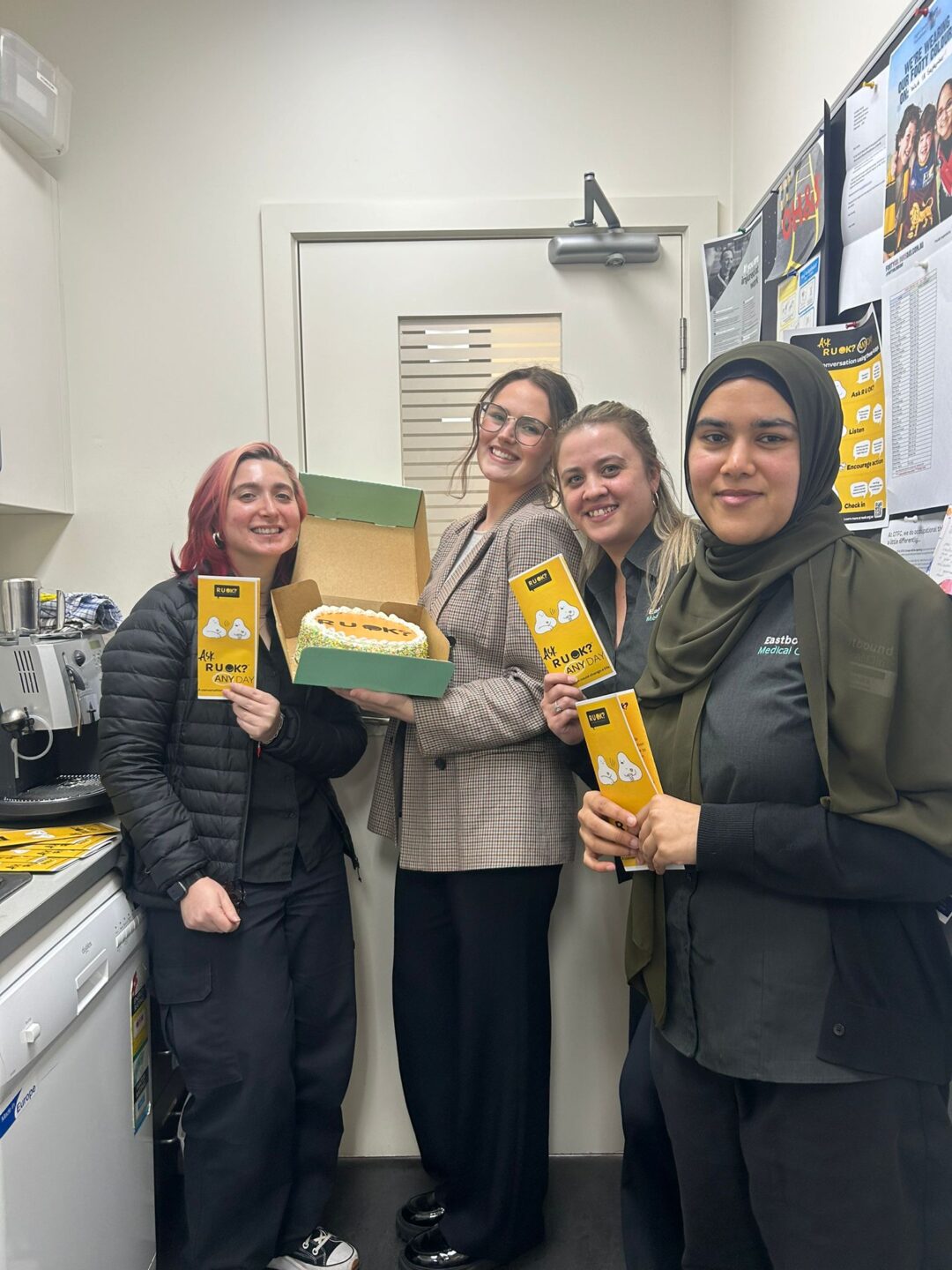
Thursday 12 September was R U OK? Day.

R U OK? is a national suicide prevention charity that empowers people to meaningfully connect and lend support to others. Checking in with friends, family and colleagues can have a profound impact on someone who might be struggling with life.

R U OK? contributes to suicide prevention efforts by encouraging people to invest more time in their personal relationships and by building the capacity of informal support networks – friends, family and colleagues – to be alert to those around them.

To learn more, visit ruok.org.au

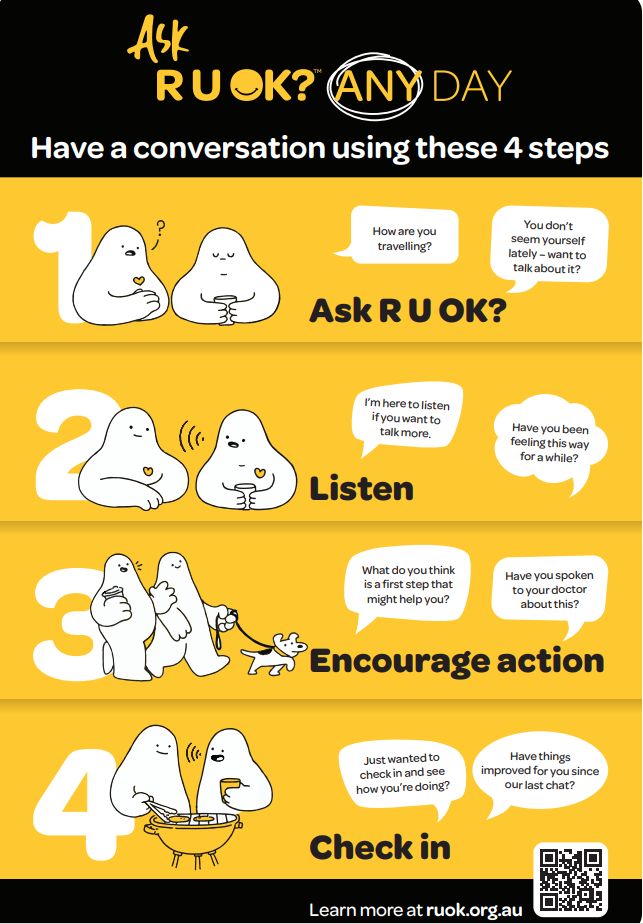
How to start a conversation about mental health

R U OK? focuses on building the confidence and skills of the help-giver – the person who can have a meaningful conversation with someone who is struggling with life.

Before you can look out for others, you need to look out for yourself. If you’re not in the right headspace or you don’t think you’re the right person to have a conversation about mental health, try to think of someone else who might be able to offer their support.

If you are ready and prepared to have the conversation but are wondering where to start, follow the below guide.

Informational guide

R U OK? Day at Eastbound

To mark the day, Eastbound staff gathered for a snack and a chat – this was a great opportunity for us to check in with each other and lend support if needed.

We also made up some informational brochures, which are available at reception for patients to read.

See your GP for mental health support

Consulting GPs at Eastbound can engage in mental health care for you, which includes creating a mental health treatment plan.

Doctors Matthew Yap and Justine Birchall have particular interests in mental health care.

There are two on-site psychologists at Eastbound, Dr Lynette Kramer and Lara Hanson, who are highly qualified to treat your mental health concerns.

Remember to check in with your family, friends and colleagues any day; our mental health is important every day, not just for one day.

If you’re looking for mental health support, please speak to your GP.

For urgent support, call Lifeline on 13 11 14.

What is diabetes?

Diabetes is a serious and chronic condition which can affect the entire body. While there is currently no cure, you can live an enjoyable life by receiving diabetes care, which includes learning about the condition and effectively managing it.

Diabetes is a condition where there is too much glucose in the blood. The body can’t make insulin, enough insulin, or is not effectively using the insulin it does make. Over time, high glucose levels can damage blood vessels and nerves, resulting in long-term health complications including heart, kidney, eye and foot damage.

Diabetes care at Eastbound Clinic

Diabetes is a chronic condition that requires careful management. If you need support for your diabetes, our wonderful diabetes nurses can work with your doctor to provide tailored, GP-managed guidance.

Trish Collis is a Credentialled Diabetes Educator. She delivers comprehensive diabetes care and education for people with Type 1, Type 2, and Steroid Induced Diabetes. She further provides advice on Pre-Pregnancy planning and Pump therapy, Continuous Glucose monitoring, Bolus Calculator and insulin titration.

Yiming Ma is a Nurse Diabetes Educator. She is passionate about assisting people with diabetes and believes that self-management and team-based care, with regular reviews and consistency in care providers, are effective to prevent complications from diabetes.

Trish and Yiming support the consulting GPs in delivering the ongoing care and monitoring that is required to manage type 1, type 2, and gestational diabetes, with no out-of-pocket costs. Speak to your GP to learn more and determine your eligibility. 

National Diabetes Week

National Diabetes Week (14 – 20 July) is a national awareness campaign driven by Diabetes Australia. People living with diabetes should be able to access the life-saving technology they need to live well.

This year, Diabetes Australia is shining a light on the impact of diabetes tech and what needs to be done to improve access.

Find out more about this year’s theme, download the campaign resources and find out how you can get involved.

Stay informed

Did you know that Eastbound produces a monthly digital newsletter?

We deliver important community health updates and clinic news to your inbox.

Our July newsletter is out now! Read it here.

Not yet subscribed?

Simply navigate to the bottom of this page and fill out the form.

Bowel screening can save lives

Bowel cancer is one of the deadliest and most common cancers in Australia. However, if found early, more than 90% of cases can be successfully treated. This Bowel Cancer Awareness Month, we are encouraging patients to participate in bowel screening.

Bowel cancer, also known as colorectal cancer, develops from the inner lining of the bowel and is usually preceded by growths called polyps, which may become invasive cancer if undetected.

How to do it

The National Bowel Cancer Screening Program reduces illness and death from bowel cancer by detecting the early signs of the disease using a free, simple test that can be done at home.

People aged 50 to 74 receive a bowel cancer screening kit in the post every 2 years. People aged 45 to 49 can request their first kit by submitting a webform or calling 1800 627 701.

If you are experiencing bowel cancer symptoms, don’t wait for your kit in the post. Speak with your doctor today.

Stay informed

Did you know that Eastbound produces a monthly digital newsletter?

We deliver important community health updates and clinic news to your inbox.

Our June newsletter is out now! Read it here.

Not yet subscribed?

Simply navigate to the bottom of this page and fill out the form.